Public Education and Awareness

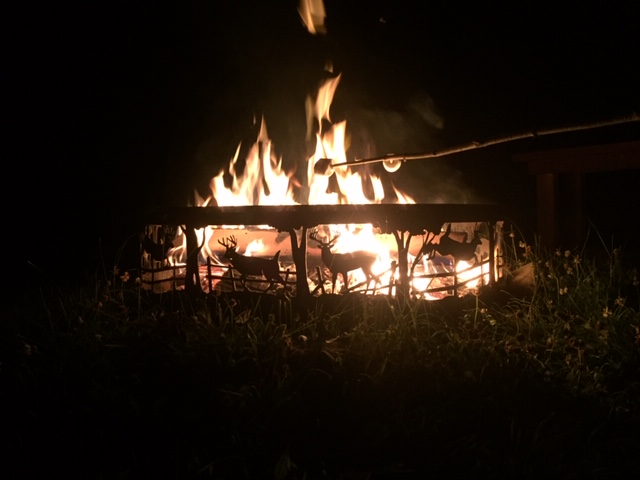
Image of campfire

Campfire Safety Tips

All it takes is one spark for things to go wrong. A carelessly abandoned campfire or a campfire built without safe clearance can turn a small fire into a dangerous and fast-moving blaze. Be sure to build your campfire in a way that does not endanger anyone or the surrounding forest. Enjoy a safe campfire by following these campfire safety tips:


  • Check with local authorities on open-air burning restrictions and follow local burning regulations. Keep up-to-date on fire bans in the area.
  • Never build a campfire on a windy day. Sparks or embers from the fire could travel quite a distance setting an unintentional fire.
  • Watch the wind direction to ensure sparks aren't getting on flammable materials. Put the fire out if wind changes begin to cause concern
  • Build campfires where they will not spread; well away from tents, trailers, dry grass, leaves, overhanging tree branches or any other combustible.
  • Build campfires in fire pits provided or on bare rock or sand, if no fire pit is provided.
  • Maintain a 2 to 3.5 metre (6 – 10 foot) clearance around your campfire.
  • Build a campfire surround with rocks to contain your campfire. Be aware that rocks obtained from the river may explode due to moisture in the rock becoming superheated by the campfire.
  • Use crumpled paper and/or kindling to start a fire rather than using flammable liquids.
  • Never use gasoline as an aid to starting a campfire. If a fire starter is required, use only proper lighting fluid and use the lighting fluid sparingly. NEVER PUT IT ON AN OPEN FLAME since the fire can ignite the stream of lighting fluid and the flame will travel up the stream igniting the container in your hand and causing serious injury. Once the lighting fluid has been applied to the firewood, allow a few minutes for the explosive vapours to disperse before lighting. Remove the lighting fluid container a safe distance away before lighting the campfire.
  • Secure all lighters and matches and keep them out of children’s reach.
  • Keep campfires to a small, manageable size no more than 1 metre (3 feet) high by 1 metre (3 feet) in diameter and don't let it get out of hand.
  • Don't burn garbage in your campfire. The smell is unpleasant for you and your neighbours, and may attract animals to your campsite.
  • Keep all combustible materials, including flammable liquids, propane cylinders, lighting fluid, etc. away from the campfire.
  • Stack extra wood upwind and away from the campfire so that sparks from the campfire cannot ignite your woodpile. Have sufficient wood on hand to eliminate the need to leave your campsite to restock.
  • Never leave campfires unattended. Ensure that a responsible adult is monitoring the campfire at all times. Supervise children around campfires at all times and never allow horseplay near or involving the campfire, such as jumping over a campfire. Do not allow children to run around near a campfire.
  • Closely supervise children while roasting treats over a campfire. A flaming marshmallow can easily ignite a child’s clothing. A heated metal skewer can be a burn hazard, as well as a puncture hazard.
  • Loose clothing can easily catch fire. Never reach into a campfire to rearrange pieces of wood.
  • Teach children how to STOP, DROP and ROLL should their clothing catch on fire. Teach children to cool a burn with cool running water for 3 – 5 minutes.
  • Keep plenty of water and a shovel around to douse the fire when you're done. Use caution when applying water to the campfire. Once the water has been applied, stir the dampened coals and douse it again with water. As an added precaution, shovel sand or dirt to cover the dampened coals to smother any remaining embers.
  • As little as 1 second contact with a 70°C (158°F) campfire can cause 3rd degree, full thickness burns.
  • The average campfire can get as hot as 500°C (932°F) in as little as 3 hrs.
  • The majority of children are burned the morning after a fire from coming into contact with hot ashes or embers.
  • A campfire left to burn itself out or put out with sand only, was still 100°C (212°F) eight hours later. The buried coals and embers retain their heat underground like an oven. There is also a risk that the fire may spontaneously re-ignite. A child may mistake the pile of sand or dirt as a sand castle and attempt to play in it. The temperature, less than 10 cm (4”) below the surface of the sand or dirt can be as high as 300 °C (572°F).
  • A campfire put out with water is reduced to 50°C (122°F) within 10 minutes of applying the water and reduced to 10°C (50°F) after 8 hrs. The safest way to extinguish a campfire is with water.
Extreme cold and wind chill can be extremely dangerous. Be prepared. Dress appropriately in layered, warm, wind resistant clothing. Always have hats (that cover your ears), gloves and a scarf handy. Keep extra clothing and outerwear in your car. Protect yourself from frostbite.

Types

To understand how to properly choose and use a fire extinguisher, you must first understand that there are different types of fires, and no single type of fire extinguisher is suitable for all fires.

More fire extinguisher safety tips

Fires are divided into four different classes, which are:

Types of Fires


Class Type

Description

What Are the Different Classes of Fire?

Class "A" Fires Ordinary combustibles such as wood, cloth, paper, rubber, etc. The symbol for this class is a green triangle.

What Are the Different Classes of Fire?

Class "B" Fires Flammable or combustible liquids, flammable gasses, grease, oil and similar material. The symbol for this class is a red square. 

Fire Extinguishers

Class "C" Fires A class 'C' fire is any fire which involves live electrical equipment. Once the electricity has been shut off, the fire becomes the class of whatever material is burning. The symbol for this class is a blue circle.

Amerex Fire Systems 

Class "D" Fires Certain combustible metals such as sodium, magnesium, potassium, etc. You should not have to worry too much about this type of fire in your home. The symbol for this class is a yellow star.


Floods

Current situation - The Crowe Valley Conservation Authority provides updates to the Township especially in the area of the Crowe River watershed including Chandos Lake.

Flooding is a significant natural hazard in Ontario that can happen at any time. Heavy rains, rapid snowmelt, spring break-up and ice jams, wind-related storm surges across large lakes or the failure of dams can all cause floods.

Advance warning gives residents, municipalities and other government agencies the chance to take appropriate precautions. Ontario uses the terms listed below:

Flood Warning Flooding is imminent or occurring within specific watercourses and municipalities.

Flood Watch The potential for flooding exists within specific watercourses and municipalities.

Flood Outlook Gives early notice of the potential for flooding based on weather forecasts calling for heavy rain, snowmelt, high winds or other conditions.

Watershed Conditions Statement - Water Safety: indicates that high flows, melting ice or other factors could be dangerous for such users as boaters, anglers and swimmers but flooding is not expected.

The Township of North Kawartha is also affected by Eels Creek which runs throughout the Township and is monitored and controlled by the Trent Severn Waterway.  Otonabee Conservation Authority reports on Stony Lake and in areas surrounding Peterborough.

Further reference information:

By-Law 2018-0085 regulates the setting of open air fires, by including the ban of flying lanterns.

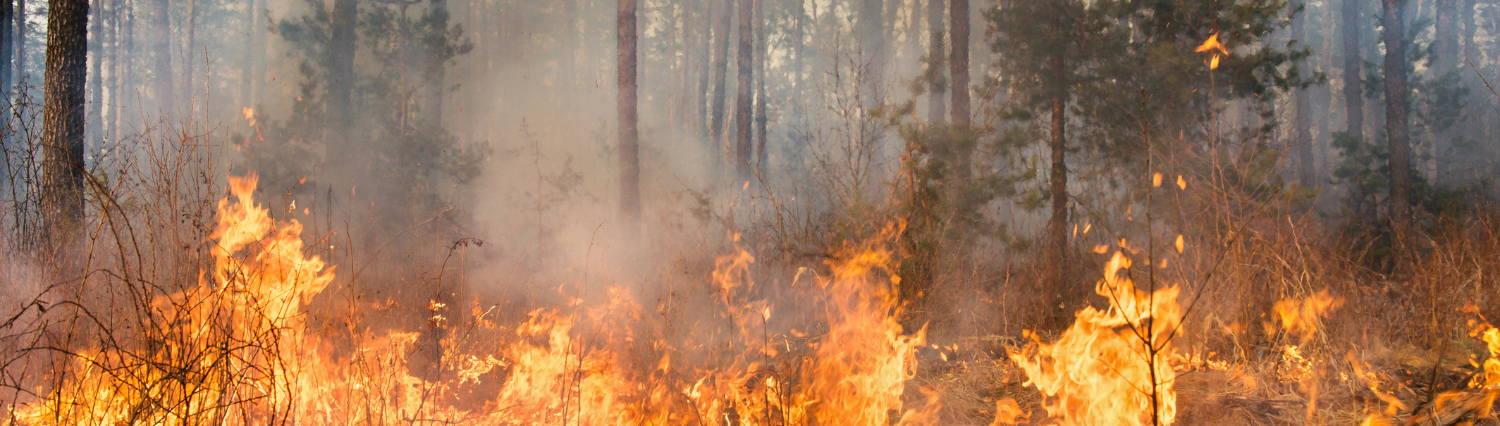
image of forest fire

Social Media
Check out our Twitter accounts for safety tips and other forest fire related information.
@ONForestFires
@ONFeudeforêt

MNRF https://www.facebook.com/ONresources/ and https://twitter.com/onresources

For smoke drift conditions across North America, visit:
Smoke drift across North America

For air quality in your area, please visit:
Public Weather Alerts for Canada

For information about forest fire smoke and your health, consult:
Smoke and your health

For highway conditions, including road closures:
511on.ca
Municipal 511

Smoke Information – General Predictions and Health Information
Smoke Forecast - FireSmoke.ca
FireWork: National Wildfire Smoke Model - Environment Canada (weather.gc.ca)
Air Quality Health Index (weather.gc.ca)
Forest Fire Smoke and Your Health - Emergency Management Branch - Ministry Programs - Public Information - MOHLTC (gov.on.ca)

In an emergency you will need some basic supplies. You may need to get by without power or tap water. Be prepared to be self-sufficient for at least 72 hours.

You may have some of the items already, such as a flashlight, battery-operated radio, food and water. The key is to make sure they are organized and easy to find. Would you be able to find your flashlight in the dark?

Make sure your kit is easy to carry. Keep it in a backpack, duffel bag or suitcase with wheels, in an easy-to-reach, accessible place, such as your front hall closet. Make sure everyone in the household knows where the emergency kit is.

Basic emergency kit
  • Water - at least two litres of water per person per day. Include small bottles that can be carried easily in case of an evacuation order.
  • Food that won't spoil, such as canned food, energy bars and dried foods (remember to replace food and water once a year).
  • Manual can opener.
  • Crank or battery-powered flashlight (and extra batteries).
  • Crank or battery-powered radio (and extra batteries).
  • First aid kit.
  • Special items such as prescription medications, infant formula, equipment for people with disabilities.
  • Extra keys to your car and house
  • Some cash in smaller bills, such as $10 bills and change for payphones
  • A copy of your emergency plan and contact information

You can purchase a pre-packaged emergency kit from the Canadian Red Cross at www.redcross.ca.

Visit Emergency Management Ontario or call 1 800 O-Canada for a list of additional emergency kit items, including a car emergency kit.

Heating/Cooling Centres

For tips on Cooling down see Peterborough Public Health Cool Tips for Hot Days

The North Kawartha Community Centre, located at 340 McFadden Road in Apsley is available as a Heating/Cooling Centre in response to weather/emergency events.

Crowe Valley Conservation Authority shows the Low Water Status Level.

Every Canadian household needs an emergency plan. It will help you and your family to know what to do in case of an emergency. Remember, your family may not be together when a storm or other emergency occurs. Identify safe places where everyone should meet if they have to leave home during an emergency.

Start by discussing what could happen and what you should do at home, at school or at work if a severe storm strikes. To be prepared, make a list of what needs to be done ahead of time. Store important family documents, such as birth certificates, passports, wills, financial documents, insurance policies, etc. in waterproof container(s). Identify an appropriate out-of-town contact that can act as a central point of contact in an emergency.

Write down and exercise your plan with the entire family at least once a year. Make sure everybody has a copy and keeps it close at hand.

For more information on making an emergency plan, call 1-800-O-Canada or visit Emergency Management Ontario to download or complete an emergency plan online.

To ensure preparedness of the residents and business owners of our municipality, from time to time we provide helpful tips and information through the local newspapers and by other means. Brochures on a variety of emergency management topics are available at the municipal office or through the Government of Canada's Emergency Preparedness website and the Emergency Management Ontario website.

In addition,we promote the need for personal preparedness during Emergency Preparedness Week, which is held the first week in May of each year. Be Prepared, plan for emergencies. In an emergency, your family may not be together, or you may be asked to evacuate your home. Develop a family emergency plan before an emergency strikes and practice your plan! Knowing what to do is your best protection.

Please contact us if you would like to have someone speak at your event or would like information to share with your group. We would be happy to discuss the options with you.

Emergency Management Ontario publishes handy fact sheets with valuable information about dealing with emergencies. Click on the topic that is of most interest to you.

image of rv

RV/Motorhome Fire Safety Tips

Whether camping, partying or just relaxing in your RV, fire safety is essential.  It is critical that every member of your party know what to do in an emergency or fire.  If you are one of the millions of recreational vehicle (RV) enthusiasts who love to take to the road and explore this great country of ours, ensure your family’s safety while travelling in your RV by following these fire safety guidelines. 

  • In an emergency, please make sure we can find you – SECONDS DO COUNT!  When travelling in an RV, it’s crucial to know your location so emergency responders can find you in the event of an emergency.  Be aware of your location and surroundings.
  • Confirm the local emergency numbers for police, fire and ambulance – is 911 service available in the area?
  • Most campgrounds are in more remote areas that may not provide cell phone coverage.  Check your cell phone coverage.
  • When you call 911 from a regular land phone line emergency services receive enhanced 911 data indicating the address and municipality of where the call is originating, should the caller be unable to provide this information.  This enhanced 911 data is not available for cell phone calls, so ensuring everyone knows the exact location in the event of an emergency is critical in obtaining a timely response from emergency services.
  • When vacationing in an isolated area, keep in mind that help from emergency services may be some distance away.  It’s vitally important that you eliminate your risk from fire and have a fire escape plan in place that everyone is familiar with and has practised.  Have at least two escape routes – one in the front and one in the rear of the RV.  Test all escape windows, hatches and door latches for smooth operation and keep all escape windows, hatches and doors clear of any obstructions.  As soon as they are old enough, teach children how to open escape hatches and emergency exits and have them practise.  LINK TO ESCAPE PLAN REQUIREMENTS.  Fire Escape Plan Guidelines
  • The first rule of RV firefighting is to save lives first and property second.  Get yourself and your family to safety before attempting to extinguish any fire.  Only if you can do so without endangering yourself or others should you use firefighting aids on hand.  Re-emphasize to everyone aboard that objects can be replaced, people can’t!  Never re-enter a burning RV to retrieve anything – GET OUT & STAY OUT!
  • Install and maintain at least one smoke alarm in your RV near the sleeping area.  Special 12v smoke alarms, designed specifically for RVs, are available from specialized retailers.  Depending on the size of your RV and placement of sleeping areas, more than one smoke alarm may be required. 
  • Install and maintain at least one carbon monoxide alarm in your RV near the sleeping area.  Special 12v carbon monoxide alarms, designed specifically for RVs, are available from specialized retailers.  Be aware that residential style carbon monoxide alarms that plug directly into the electrical outlet require 110v power and would only work and sound an alarm when your RV is plugged into an electrical source at a campground, but would not function when you are on the road or operating off of your 12v battery supply.  Consider that some low cost detectors cause false alarms, so be sure to obtain a quality unit.  Do not select a detector just on its cost.  It may not be adequate to do the job that is necessary when the time comes. 
  • Install a propane leak alarm at floor level, no more than 6 inches above the floor or lowest level to alert you in the event of a propane leak.  Propane gas, like gasoline fumes, tends to pool in low-lying spots and even a small spark can ignite it.  If you have a leak, immediately evacuate the area and shut off the propane at the tank, if it is safe to do so. 
  • Ensure that all travellers in the RV know what the sound of each type of alarm indicates and what to do when they hear it.
  • Test all smoke alarms, carbon monoxide alarms and propane leak alarms weekly when the RV is in use.
  • Install a fully charged multi-purpose or ABC fire extinguisher in a visible, easily accessible location near an exit where escape is also an option.  Make sure everyone knows where it is and how to use it.  If you already have a fire extinguisher installed, check the pressure gauge to ensure it’s fully charged, indicated by the needle in the green area.  A partially discharged fire extinguisher is always considered an empty one – have it refilled or replaced immediately.  Also keep in mind that the dry chemical inside the extinguisher tends to pack down in the bottom of the extinguisher over time, which may make it ineffective.  Once a month pick up the fire extinguisher, check the gauge or pin for pressure, turn it upside down and hit the bottom sharply with your hand, then shake it well.  This should dislodge any compacted dry chemical inside the extinguisher.  Most fire extinguishers have a lifespan of 5 to 15 years. 
  • Most residential fire extinguishers discharge in 8-10 seconds with a range of only 2 – 3.5 metres (6’–10’).  They should only be used to extinguish small, contained fires or to reduce a fire sufficiently to allow escape.
  • Remember, DON’T FIGHT A FIRE unless you call the fire department first!  A fire extinguisher is no substitute for the fire department.
  • Ensure family members know how to use the extinguishers and understand which extinguishers are effective on what types of fires. 
  • Have your fuel-burning appliances checked at the beginning of each camping season to ensure they are properly vented, free of any obstructions such as cobwebs, birds nests, etc., and working well.
  • Gas cylinders, pipes, fittings and connections should be checked regularly, particularly after driving on bumpy roads, which may loosen connections.
  • Only a certified propane fitter may legally install or remove propane piping, tubing equipment and appliances in an RV.  Be sure to look for approved products bearing the Canadian Gas Association (CGA), Canadian Standards Association (CSA) or Underwriters’ Laboratory of Canada (ULC) logos on the rating plate of new appliances.
  • Maintain the RV’s mechanical systems, such as radiator hoses, fuel lines, brake systems, transmission, etc., in good working order to eliminate the risk of any leaks or malfunctions that may result in a fire.
  • Ensure that the extension cord for connecting your RV to a campground’s 110v electricity supply is in good condition and of suitable gauge wire to handle the electrical load placed upon it.  Damaged extension cords must be replaced immediately.
  • Check all electrical appliances for frayed cords and any other visible
  • Electrical generators produce exhaust gasses, which contain carbon monoxide.  It is important to have the exhaust pipes extend sufficiently past the side walls or rear of the RV so that prevailing air currents can disperse this lethal gas away from the vehicle and not have it drawn back into an open window on the RV.
  • Ensure that you allow the generator to cool down before refuelling.  Always shut off the generator and any other fuel-burning appliances
  • Driving with propane on can add to the danger if you are involved in an accident or have a fire.  Shut off the propane at the tank and turn off all propane-powered appliances while driving.  Operate your refrigerator on 12v battery power or simply leave it turned off.  Most refrigerators will keep food cold or frozen for several hours, even when turned off.
  • When refuelling the propane tanks or the RV’s fuel tank it is important to shut off all interior burners, pilot lights, appliances, automatic ignition switches, as well as the RV’s motor and have all passengers exit the vehicle.
  • Propane cylinders, relief valves and regulating equipment must be located either outside the vehicle, or in a compartment gas-tight to the interior to allow any possible leaks to flow to the outside air.  Keep propane cylinders outside unless a properly designed storage compartment has been fitted on your RV.
  • Propane cylinders should not be mounted on the roof of an RV.  Propane cylinders mounted on the back of the RV pose a hazard in the event of a rear-end collision unless substantial protection to the tank is provided.
  • Show all travellers how to shut off propane valves and how to unhook 110v electrical supply cord, should either be required in an emergency.
  • Store all flammable liquids, including small disposable propane cylinders outside of the RV.
  • Whenever using the stove in your RV, open an overhead vent or turn on the exhaust fan and open a window a small amount to allow fresh air in and carbon monoxide gases out
  • The stove should never be used to heat the interior of the RV.
  • Never leave cooking unattended.
  • Store all clothes, linens and other combustibles well away from the kitchen area.  In the compact kitchens in RVs combustibles such as paper towels and curtains are likely to be closer to the stove, so exercise even greater caution than you do at home when cooking in your RV.
  • Keep all lighters and matches safely out of the reach of children.
  • Leave plenty of clearance between your propane lamp or lantern and any combustible materials.  Follow the manufacturer's recommendations for space clearance.  Select a level surface on which to place the lamp or lantern.  Ensure you have adequate ventilation whenever using a propane-powered appliance.
  • A lantern is not a space heater. Use it only as a light source. Always detach the propane cylinder before transporting a lantern and secure the cylinder in a vertical, upright position.
  • Recreational travellers to the United States should be aware that effective April 1, 2002 many states in the United States have adopted a requirement that all propane cylinders with a capacity from 4 to 40 pounds must have an Overfill Protection Device (OPD).  All propane cylinders without an OPD are prohibited from being refilled by anyone.  The OPD serves as a safety shut-off device and prevents overfilling of propane cylinders to avert propane release, fire and possible injury.  Propane cylinders equipped with an OPD have the letters “OPD” stamped on the valve hand wheel and on the side of the valve.  Most propane cylinders with a triangular valve wheel have an OPD.  Propane cylinders with a round or star-shaped valve wheel usually do not have an OPD.  Canadian provinces have not yet adopted the requirement for OPD devices on propane cylinders in order to refill the cylinder.  (NFPA 58, Section 2.3.1.5, the LP-Gas Code) 
  • Establish safe campfire rules to be followed when camping.

Severe Thunderstorms, Lightening and Hail and Tornadoes

Ministry of Ontario - Thunderstorm
Ministry of Ontario - Tornadoes

Thunderstorms are often accompanied by high winds, hail, lightning, heavy rain and in rare cases can produce tornadoes. Hail is formed when updrafts in thunderclouds carry raindrops upward into extremely cold areas of the atmosphere, where they freeze and merge into lumps of ice.

Thunderstorms, lightning and hail:
  • Thunderstorms and lightning occur throughout Canada but less frequently in the North. On average, 10 people die each year in Canada and up to 160 are injured during such storms.
  • Thunderstorms are usually over within an hour, although a series of thunderstorms can last several hours.
  • Hailstorms occur across Canada, mostly from May to October. They are most frequent in Alberta, the southern Prairies and in southern Ontario.
  • Some hailstones are the size of peas while others can be as big as grapefruits.
  • Hail comes down at great speed, especially when accompanied by high winds and can cause serious injuries and damages.
What to do if outside
  • If you are caught outside and you can see lightning or hear thunder, you are in danger of being hit. Seek shelter immediately either in an enclosed building or a hard-topped vehicle. There is no safe place outside in a thunderstorm.
  • If caught outside far from a safe location, stay away from tall objects, such as trees, poles, wires and fences. Take shelter in a low lying area.
  • Wait 30 minutes after the last rumble of thunder before going outside again.
What to do if inside

Before a severe thunderstorm, unplug radios, televisions and appliances (especially those that may start up automatically when the power is restored). Listen for weather updates on your wind-up or battery-powered radio.

  • If you need to use the phone during a thunderstorm use a cordless phone.
  • Stay away from items that may conduct electricity, such as corded telephones, appliances, sinks, bathtubs, radiators and metal pipes.
  • If hail is forecast, protect your vehicle by putting it in the garage or other enclosed space.
  • Take cover when hail begins to fall. Do not go out to cover plants, cars or garden furniture.
  • When a hailstorm hits, stay indoors, and keep yourself and your pets away from windows, glass doors and skylights which can shatter if hit by hailstones.
Warning signs of a potential tornado
  • Severe thunderstorms.
  • An extremely dark sky, sometimes highlighted by green or yellow clouds.
  • A rumbling or a whistling sound caused by flying debris.
  • A funnel cloud at the rear base of a thundercloud, often behind a curtain of heavy rain or hail.
What to do
In all cases
  • Get as close to the ground as possible, protect your head and watch for flying debris.
  • Do not chase tornadoes - they are unpredictable and can change course abruptly.
  • A tornado is deceptive. It may appear to be standing still but may in fact be moving toward you.
In a house
  • Go to the basement or take shelter in a small interior ground floor room such as a bathroom, closet or hallway.
  • If you have no basement, protect yourself by taking shelter under a heavy table or desk.
  • In all cases, stay away from windows, outside walls and doors.
On a farm

If your personal safety is not at risk, you may have time to open routes of escape for your livestock. Open the gate, if necessary, and then exit the area in a direction perpendicular to the expected path of the tornado.

In a recreational vehicle or mobile home
  • Find shelter elsewhere, preferably in a building with a strong foundation.
  • If no shelter is available, crouch down in a ditch away from the mobile home or recreational vehicle. Beware of flooding from downpours and be prepared to move.
In a high rise building
  • Take shelter in an inner hallway or room, ideally in the basement or on the ground floor.
  • Do not use the elevator.
  • Stay away from windows.
In a gymnasium, church or auditorium
  • Large buildings with wide-span roofs may collapse if a tornado hits.
  • If you are in one of these buildings and cannot leave, take cover under a sturdy structure such as a table or desk.
In a vehicle
  • If you spot a tornado in the distance go to the nearest solid shelter.
  • If the tornado is close, get out of your car and take cover in a low-lying area, such as a ditch.
  • Do not take shelter under an overpass or a bridge. Winds can accelerate under an overpass or a bridge and cause injury or death from flying debris.

Hydro One

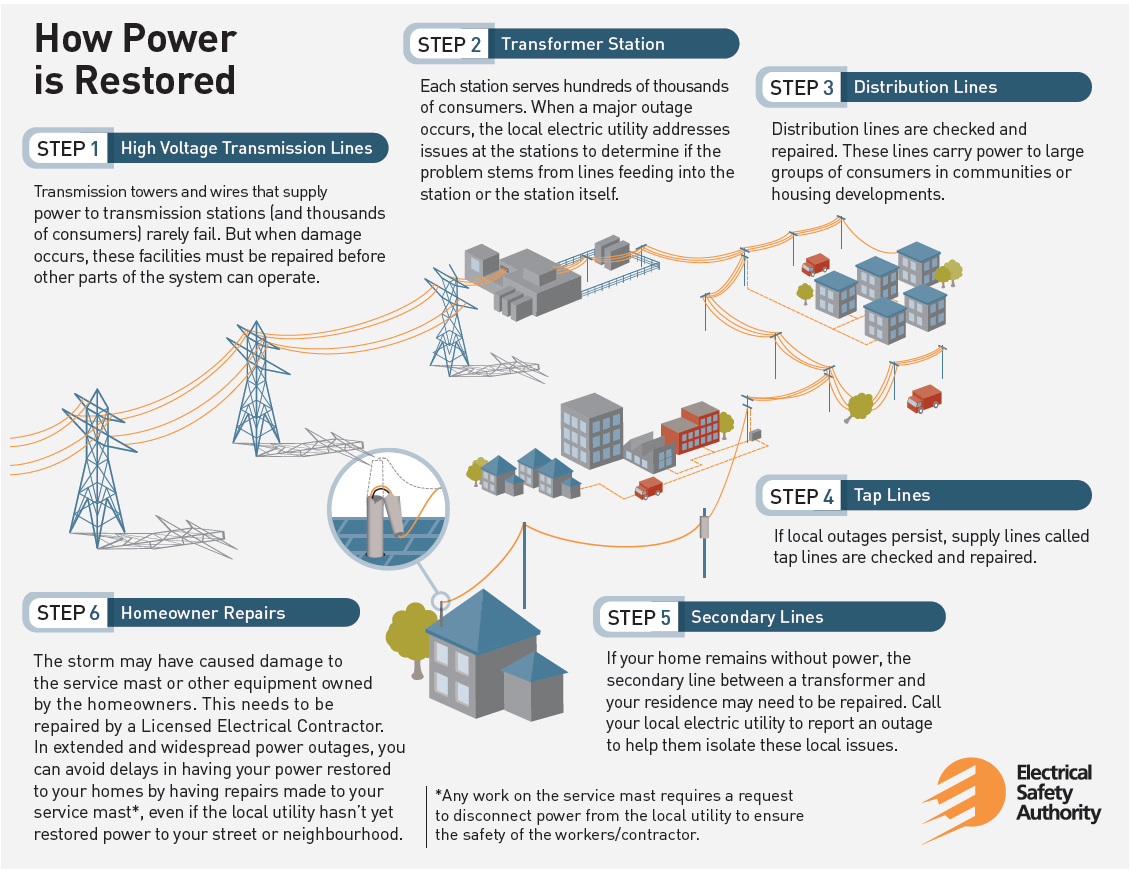
To report power outages to Hydro One, call 1-800-434-1235 with your address and / or account number, 24 hours / 7 days a week. Download their mobile app, search Hydro One.

Weather Alerts - Ontario

Listen to your local radio stations. Monitor social media and follow local news media authorities. Click here for Public Alerts in Ontario.

Jesse Lambe
Fire Chief
The Township of North Kawartha Emergency Services 
10193 Highway 28
Apsley, Ontario K0L 1A0

T. 705-656-1224
T. 705-656-4445 ext. 221
Toll Free: 1-800-755-6931 ext. 221
F. 705-656-4446
Email the Fire Chief

Map this location.

News, alerts, notices, agendas and minutes directly to your email.

Subscribe

Stay Connected by subscribing to Township news, alerts, notices and newsletters directly to your email. 

Additionally, you may subscribe to be notified of Council, Committees and Boards agendas and meetings.